

Compared with traditional protective materials such as plastic and foam, paper corner protectors not only have unique advantages, but also have some corresponding disadvantages.
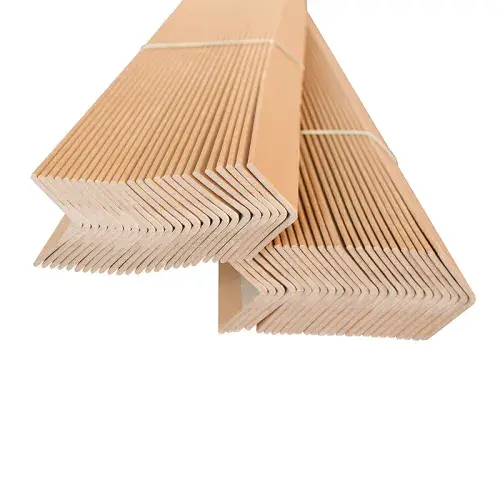
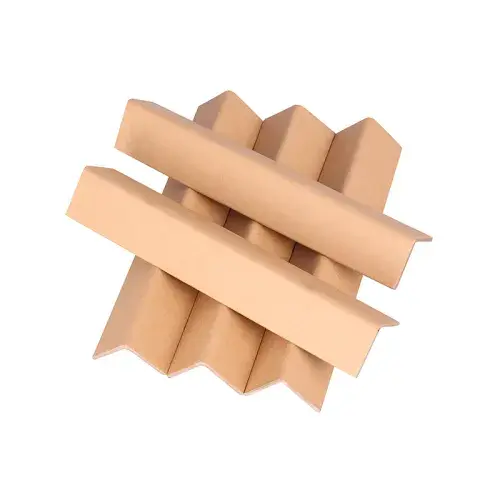
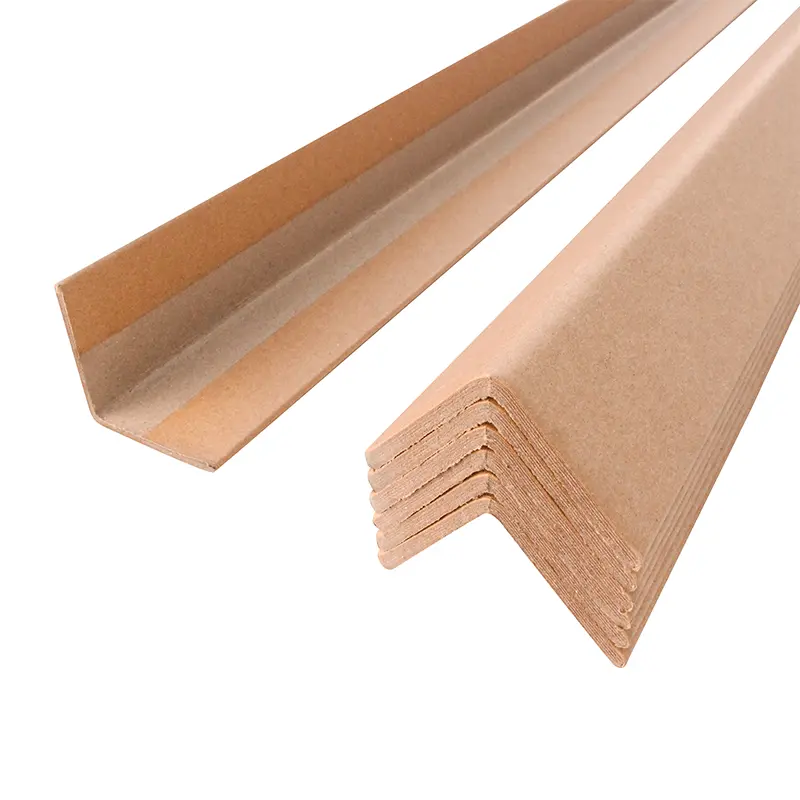
Advantages of Paper Corner Protectors
Environmental protection One of the biggest advantages of paper corner protectors is their environmental protection. Compared with plastic and foam protective materials, paper corner protectors are usually made of recyclable and biodegradable cardboard, which makes them a more sustainable choice. Globally, more and more companies and consumers pay attention to environmental protection, so choosing paper corner protectors can greatly reduce the burden on the environment. In contrast, plastic and foam are more difficult to recycle, and they usually cause long-term pollution to the environment.
Cost-effectiveness Paper corner protectors are generally more cost-effective than foam and plastic protectors during manufacturing and transportation. The cost of cardboard materials is relatively low and the production process is simple, so the overall cost is relatively economical. This is undoubtedly a cost-effective choice for most companies that require a large amount of packaging.
Customizability and branding Paper corner protectors can be customized according to customer needs, including size, color and printing patterns. This makes the corner protection not only protective, but also helps companies promote their brands. For example, customized paper corner protectors can be printed with the company's logo or advertising information to increase the market visibility of the product. This is usually difficult to achieve with plastic and foam protectors.
Good damage prevention performance Paper corner protectors can effectively absorb impact and prevent damage to the corners of products during transportation. Especially when transporting products that require precision protection (such as electronic devices, home appliances, glassware, etc.), paper corner protectors can provide additional safety to prevent products from being scratched or cracked due to collisions.
Versatility Paper corner protectors are not only suitable for a single type of goods, but can be widely used for goods of various shapes and sizes, such as furniture, electronic products, glass products, etc. Therefore, paper corner protectors are often used as one of the standard configurations of packaging supplies and have become the preferred corner protection product for many companies.
Disadvantages of paper corner protectors
Low strength Although paper corner protectors can effectively provide corner protection in some cases, they are less resistant to pressure and impact than plastic and foam protectors. Although paper corner protectors can prevent mild collisions, they may be deformed or damaged under strong pressure or heavy objects. This means that in extreme transportation environments, paper corner protectors may not provide the same protection as plastic or foam.
Limited Scope of Application In some demanding transportation environments, paper corner protectors may not fully meet the protection needs. For example, for some high-value, high-fragility or overweight goods, using paper corner protectors may not provide sufficient protection, and foam or plastic corner protectors may be more suitable at this time.
Poor Moisture Resistance Paper corner protectors are less water-resistant and are easily damaged when exposed to moisture or water. Especially in humid environments, cardboard materials may become soft, resulting in reduced protection. Therefore, for goods transported in areas with high humidity, paper corner protectors may not be as effective as more water-resistant materials such as foam and plastic.
Heavy Weight Although the weight of the paper corner protector itself is not too heavy, its weight may add up to an additional burden on the overall packaging when transported in large quantities. In contrast, foam and plastic materials are generally lighter, which can effectively reduce transportation costs.
Comparison summary of paper corner protectors and plastic and foam protective materials
Cost and environmental protection: Paper corner protectors have obvious advantages in both cost and environmental protection, and are suitable for most companies, especially those that focus on sustainable development.
Strength and durability: Although paper corner protectors provide sufficient daily protection, foam and plastic protectors perform better in terms of strength, compression resistance and durability.
Customization and branding: Paper corner protectors are easier to customize and become a powerful tool for marketing. Plastic and foam protectors are generally more difficult to customize in this way.
Applicability: Paper corner protectors are suitable for the transportation and packaging of most goods, but for transportation under extreme conditions, they may not be as competitive as materials such as plastic and foam.
In actual applications, companies need to consider and choose paper corner protectors or other protective packaging solutions based on multiple factors such as product characteristics, transportation conditions and budget. As an efficient, environmentally friendly and low-cost corner protection product, paper corner protectors have become the first choice of more and more companies in daily logistics and transportation. If companies pursue environmental protection and cost-effectiveness without involving extreme transportation environments, paper corner protectors are undoubtedly an ideal choice.